The Black Swamp
Cock Ring
Built automatically by an AI system at 4:48 p.m. It will sometimes be wrong — sources are named beneath every item. Submit a correction here.Elaborada automáticamente por un sistema de inteligencia artificial a las 4:48 p.m. A veces se equivocará — las fuentes se nombran debajo de cada nota. Envíe una corrección aquí.
Gloria Steinem, born in Toledo and schooled at Waite, dies in New York at 92Gloria Steinem, nacida en Toledo y educada en Waite, muere en Nueva York a los 92 años
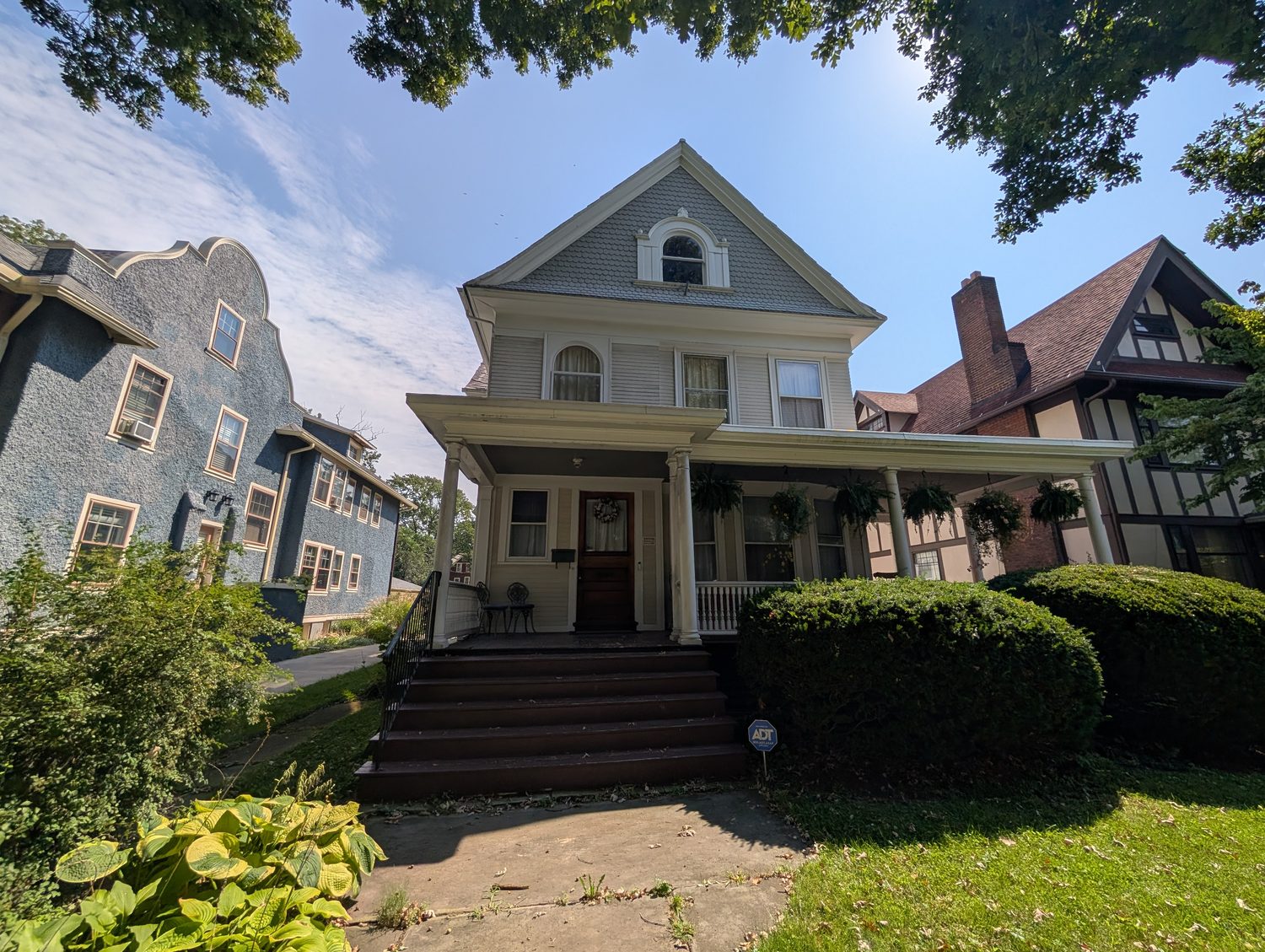
Gloria Steinem, who was born in Toledo in 1934 and lived on Woodville Road in East Toledo from her parents’ divorce until her last year of high school, died Wednesday at her home in New York City. She was 92. The announcement was posted Thursday morning on her Instagram account and gave no cause of death. “Yesterday, Gloria Steinem passed away peacefully at her home in New York City, surrounded by some of the many who loved her,” it said. “Gloria’s near-century on earth were years well-lived, and she continued working for equality until the very end.”Gloria Steinem, que nació en Toledo en 1934 y vivió en Woodville Road, en el este de Toledo, desde el divorcio de sus padres hasta su último año de secundaria, murió el miércoles en su casa de Nueva York. Tenía 92 años. El anuncio se publicó el jueves por la mañana en su cuenta de Instagram y no dio una causa de muerte. “Ayer, Gloria Steinem falleció en paz en su casa de Nueva York, rodeada de algunas de las muchas personas que la querían”, decía. “El casi siglo de Gloria en la tierra fueron años bien vividos, y siguió trabajando por la igualdad hasta el final.”
She helped found Ms. magazine in 1972, and the National Women’s Political Caucus and the Women’s Action Alliance the year before, and she received the Presidential Medal of Freedom in 2013. She died 19 days before the publication of her memoir. That record is in every obituary published Thursday. The Toledo record is shorter and less known, and the best of it she wrote herself, in a 1983 essay about her mother called “Ruth’s Song.”Ayudó a fundar la revista Ms. en 1972, y el año anterior el National Women’s Political Caucus y la Women’s Action Alliance, y recibió la Medalla Presidencial de la Libertad en 2013. Murió 19 días antes de la publicación de sus memorias. Ese historial está en todas las notas necrológicas publicadas el jueves. El historial toledano es más breve y menos conocido, y lo mejor de él lo escribió ella misma, en un ensayo de 1983 sobre su madre titulado “Ruth’s Song”.
The grandmother on the school board.La abuela en la junta escolar. Pauline Perlmutter Steinem, her father’s mother, was elected to the Toledo Board of Education in 1904, the first woman elected to any public office in the city. A nonpartisan group of women nominated her, Mayor Samuel M. Jones backed her, and she finished at least 1,000 votes ahead of her nearest competitor, according to the Her Hat Was in the Ring record of the race. Her granddaughter remembered it as a campaign run “in coalition with anarchists and socialists.” She served five years and declined to run again. She led the Ohio Woman Suffrage Association from 1908 to 1911 and sat on the Toledo Public Library’s board of trustees. The house she and Joseph Steinem kept at 2228 Scottwood Ave. in the Old West End, theirs by the 1910 census, still stands. She died in Toledo on Jan. 5, 1940, when her granddaughter was five, and the granddaughter grew up on the family’s memory of her: “a suffragist who addressed Congress, marched for the vote,” and at home “a feminist who kept a neat house for a husband and four antifeminist sons, a vegetarian among five male meat eaters.” “After the vote was won, Pauline seemed to stop all feminist activity,” she wrote. “Like many later suffragists, my grandmother seems to have been a public feminist and a private isolationist.”Pauline Perlmutter Steinem, la madre de su padre, fue elegida para la junta de educación de Toledo en 1904, la primera mujer elegida para un cargo público en la ciudad. Un grupo apartidista de mujeres la postuló, el alcalde Samuel M. Jones la respaldó y terminó al menos 1,000 votos por delante de su competidor más cercano, según el registro de la elección de Her Hat Was in the Ring. Su nieta la recordó como una campaña hecha “en coalición con anarquistas y socialistas”. Sirvió cinco años y no quiso presentarse de nuevo. Dirigió la Ohio Woman Suffrage Association de 1908 a 1911 y ocupó un puesto en el patronato de la biblioteca pública de Toledo. La casa que ella y Joseph Steinem tenían en el 2228 de Scottwood Ave., en el Old West End, suya ya en el censo de 1910, sigue en pie. Murió en Toledo el 5 de enero de 1940, cuando su nieta tenía cinco años, y la nieta creció con el recuerdo familiar de ella: “una sufragista que se dirigió al Congreso, marchó por el voto”, y en casa “una feminista que llevaba una casa impecable para un marido y cuatro hijos antifeministas, una vegetariana entre cinco hombres carnívoros”. “Una vez ganado el voto, Pauline pareció abandonar toda actividad feminista”, escribió. “Como muchas sufragistas posteriores, mi abuela parece haber sido feminista en público y aislacionista en privado”.
The parents at the university.Los padres en la universidad. Leo Steinem and Ruth Nuneviller met at the University of Toledo, where both edited the student newspaper, The Teaser: Leo in 1919, Ruth in 1919–20 and again in 1922–23 as Ruth Steinem, by the university’s own account. They married twice, once in secret. Ruth wrote a gossip column for a Toledo tabloid under the name Duncan MacKenzie, then went to The Blade as a society reporter and, by her daughter’s account, rose to Sunday editor. Her daughter wrote last year that when her mother started she “had to use a man’s name in order to get published,” and that after Gloria’s older sister Susanne was born “she couldn’t do what she loved and support my father’s dreams of running a summer dance pavilion.” The pavilion was at Clark Lake in Jackson County, Michigan, where the family ran a summer resort and Leo booked big bands on a pier over the water. Ruth cooked for them. Once, when a famous band failed to clean its plates, “she took a shotgun down from the kitchen wall and held it over their frightened heads until they had finished every last crumb of strawberry shortcake. Only then did she tell them the gun wasn’t loaded.” The winters were spent on the road, Leo dealing in antiques from a trailer. The daughter’s summary of her mother’s life is the essay’s hardest sentence: “Though she drove the first Stanley Steamer, she married a man who never let her drive at all.” Ruth died in 1981, just short of 82. Her daughter wrote of her: “Dying seems less sad than having lived too little.”Leo Steinem y Ruth Nuneviller se conocieron en la Universidad de Toledo, donde ambos dirigieron el periódico estudiantil, The Teaser: Leo en 1919, Ruth en 1919–20 y otra vez en 1922–23 ya como Ruth Steinem, según la propia universidad. Se casaron dos veces, una en secreto. Ruth escribió una columna de sociedad para un tabloide de Toledo bajo el nombre de Duncan MacKenzie, y después entró en The Blade como reportera de sociedad y, según cuenta su hija, llegó a editora dominical. Su hija escribió el año pasado que cuando su madre empezó “tenía que usar nombre de hombre para que la publicaran”, y que después de nacer Susanne, la hermana mayor de Gloria, “no pudo hacer lo que amaba y a la vez sostener los sueños de mi padre de llevar un pabellón de baile de verano”. El pabellón estaba en Clark Lake, en el condado de Jackson, Michigan, donde la familia llevaba un centro vacacional de verano y Leo contrataba grandes orquestas en un muelle sobre el agua. Ruth cocinaba para ellas. Una vez, cuando una orquesta famosa no limpió sus platos, “descolgó una escopeta de la pared de la cocina y la sostuvo sobre sus cabezas asustadas hasta que terminaron hasta la última migaja del pastel de fresas. Solo entonces les dijo que el arma no estaba cargada”. Los inviernos los pasaban en la carretera, con Leo comerciando antigüedades desde un remolque. El resumen que hace la hija de la vida de su madre es la frase más dura del ensayo: “Aunque condujo el primer Stanley Steamer, se casó con un hombre que nunca la dejó conducir”. Ruth murió en 1981, poco antes de cumplir 82 años. Su hija escribió de ella: “Morir parece menos triste que haber vivido demasiado poco”.
Woodville Road.Woodville Road. Her parents divorced in 1945, and she and her mother moved into the house at 747 Woodville Road that had belonged to her mother’s parents, in the city where both her parents were born. She was 11 and had not attended school regularly before. She described the house in the 1983 essay as “a deteriorating farm house engulfed by the city, with poor but newer houses stacked against it and a major highway undermining its sagging front porch.” The two downstairs apartments were rented to a factory worker and a butcher’s family until the health department condemned the furnace. Rats shared the house and the back alley. One bit her on a summer night, and her mother, who was afraid to leave the house, took her to an emergency room. Her mother’s mental illness, which she wrote about in that essay and again last year, made the daughter the caretaker. She escaped, she wrote, into three library books a week, and earned money tap-dancing at the Eagles’ Club for ten dollars a night. She started at Waite High School in 1948. In 1951 the Presbyterian church next door bought the house to demolish it. “It was she who sold that Toledo house, the only home she had, with the determination that the money be used to start me in college,” she wrote of her mother. “She gave both her daughters the encouragement to leave home for the four years of independence she herself had never had.” Of herself she wrote: “For many years, I was obsessed with the fear that I would end up in a house like that one in Toledo.” She finished high school in Washington, D.C., living with her sister, entered Smith College in 1952 and graduated in 1956.Sus padres se divorciaron en 1945, y ella y su madre se mudaron a la casa del 747 de Woodville Road que había sido de los padres de su madre, en la ciudad donde nacieron ambos progenitores. Tenía 11 años y hasta entonces no había ido a la escuela con regularidad. Describió la casa en el ensayo de 1983 como “una granja deteriorada engullida por la ciudad, con casas pobres pero más nuevas amontonadas contra ella y una carretera importante socavando su porche hundido”. Los dos apartamentos de abajo se alquilaban a un obrero de fábrica y a la familia de un carnicero, hasta que sanidad condenó la caldera. Las ratas compartían la casa y el callejón trasero. Una la mordió una noche de verano, y su madre, que tenía miedo de salir de la casa, la llevó a urgencias. La enfermedad mental de su madre, sobre la que escribió en ese ensayo y de nuevo el año pasado, convirtió a la hija en cuidadora. Escapó, escribió, en tres libros de la biblioteca por semana, y ganaba dinero bailando claqué en el Eagles’ Club por diez dólares la noche. Entró en la secundaria Waite en 1948. En 1951 la iglesia presbiteriana de al lado compró la casa para demolerla. “Fue ella quien vendió aquella casa de Toledo, el único hogar que tenía, decidida a que el dinero sirviera para meterme en la universidad”, escribió sobre su madre. “Dio a sus dos hijas el aliento para irse de casa a los cuatro años de independencia que ella nunca tuvo”. De sí misma escribió: “Durante muchos años me obsesionó el miedo de acabar en una casa como aquella de Toledo”. Terminó la secundaria en Washington, D.C., viviendo con su hermana, entró en Smith College en 1952 y se graduó en 1956.
The city’s ledger since.El registro de la ciudad desde entonces. She spoke at the University of Toledo on Oct. 6, 1970, with Dorothy Pitman Hughes, in that year’s convocation series, returned in 1981, and on June 12, 1993, received an honorary doctor of humane letters. The university’s register of honorary degrees describes her in three words: “Feminist, Toledo native.” In 2014 a group of Toledo feminists marked her 80th birthday by starting a lending library of feminist books at the People Called Women bookstore; when the store was sold in 2017 the books went to the Toledo Lucas County Public Library, where the Steinem Sisters Collection, now more than 900 titles, is kept at the Main Library on Michigan Street. A vinyl mural by the Toledo artist Ramon Keys went up beside the shelves in December 2024, and the library marked her 90th birthday there on March 25, 2024, with a video she recorded for it. She came back to Toledo in 2015 to speak in the library’s Authors! Authors! series, and in March 2018 for a fundraiser at the Toledo Club for Teresa Fedor, then a state representative running for the Ohio Senate. Asked that week why she kept returning, she said: “Most of us have a deep feeling about where we spent our childhood or growing up years, and, for me, that’s Toledo.”Habló en la Universidad de Toledo el 6 de octubre de 1970, junto a Dorothy Pitman Hughes, dentro del ciclo de conferencias de aquel año; volvió en 1981 y el 12 de junio de 1993 recibió un doctorado honorario en letras humanas. El registro de doctorados honorarios de la universidad la describe en tres palabras: “Feminista, nacida en Toledo”. En 2014 un grupo de feministas de Toledo celebró su 80 cumpleaños creando una biblioteca de préstamo de libros feministas en la librería People Called Women; cuando la librería se vendió en 2017 los libros pasaron a la biblioteca pública del condado de Lucas, donde la Colección Steinem Sisters, hoy de más de 900 títulos, se conserva en la Biblioteca Principal de la calle Michigan. Un mural de vinilo del artista toledano Ramon Keys se colocó junto a los estantes en diciembre de 2024, y la biblioteca celebró allí su 90 cumpleaños el 25 de marzo de 2024 con un video que ella grabó para la ocasión. Volvió a Toledo en 2015 para hablar en el ciclo Authors! Authors! de la biblioteca, y en marzo de 2018 para un acto de recaudación en el Toledo Club a favor de Teresa Fedor, entonces representante estatal que aspiraba al Senado de Ohio. Preguntada esa semana por qué seguía volviendo, dijo: “Casi todos tenemos un sentimiento hondo por el lugar donde pasamos la infancia o los años de crecer, y, para mí, eso es Toledo”.

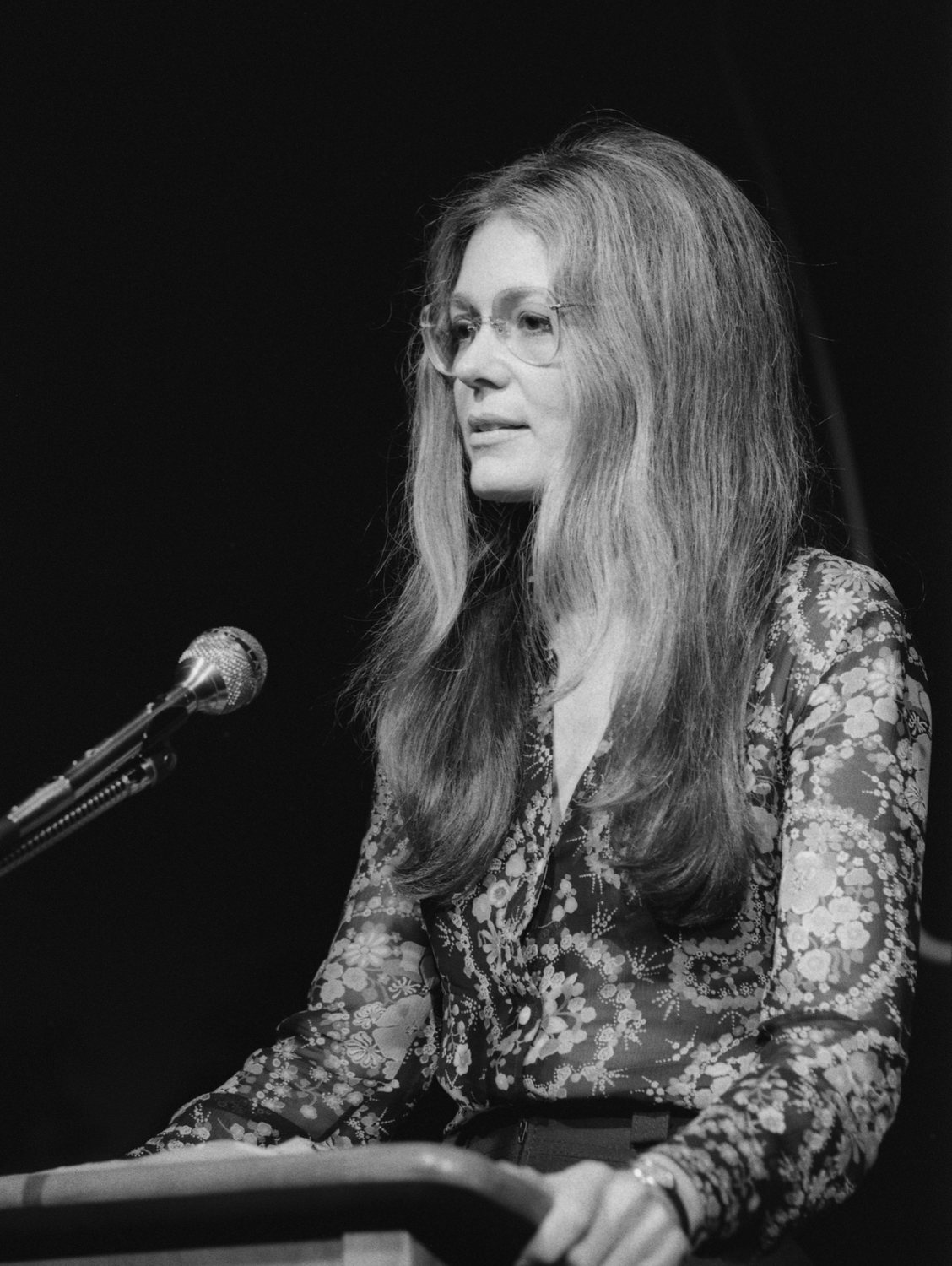


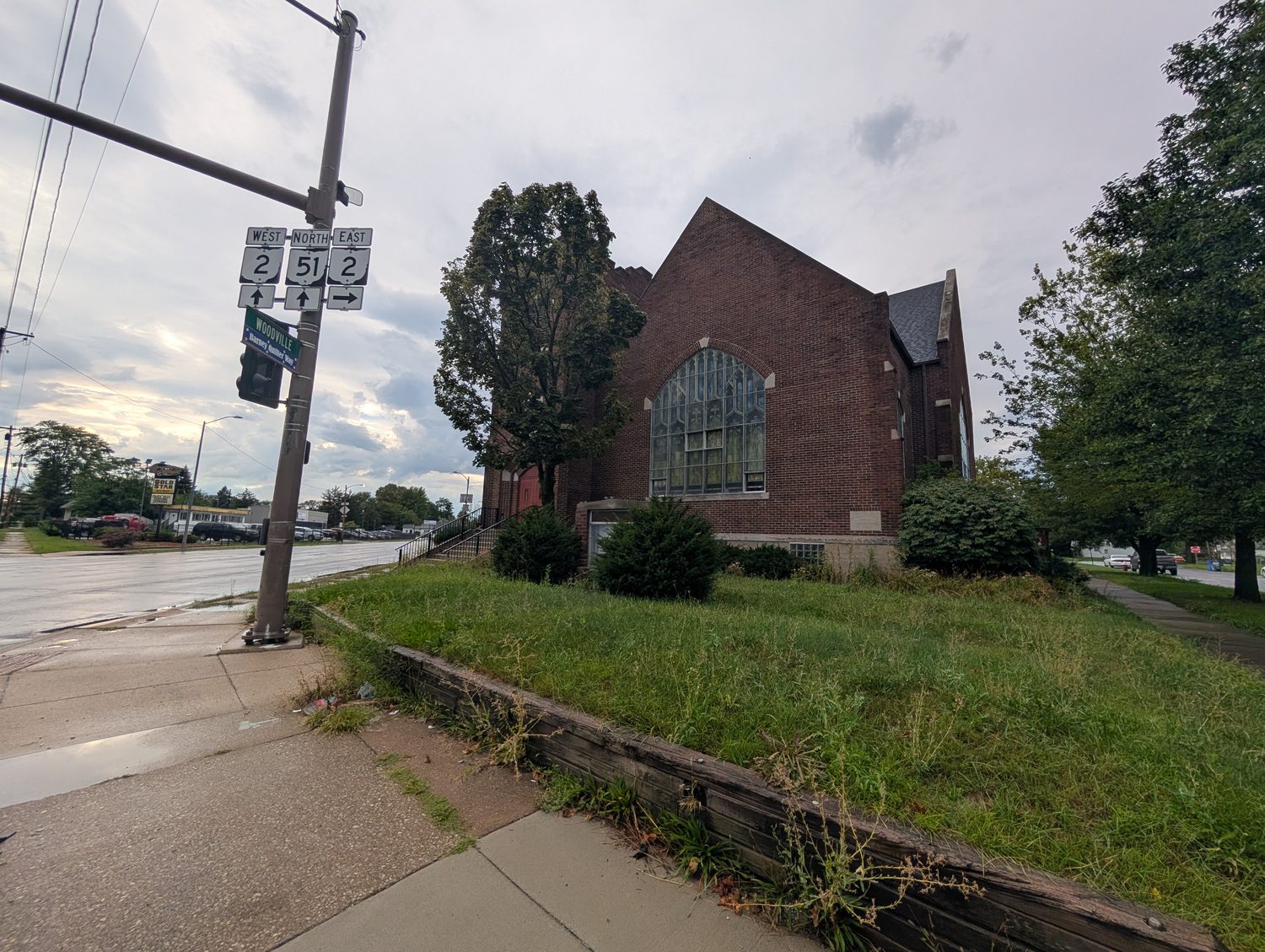
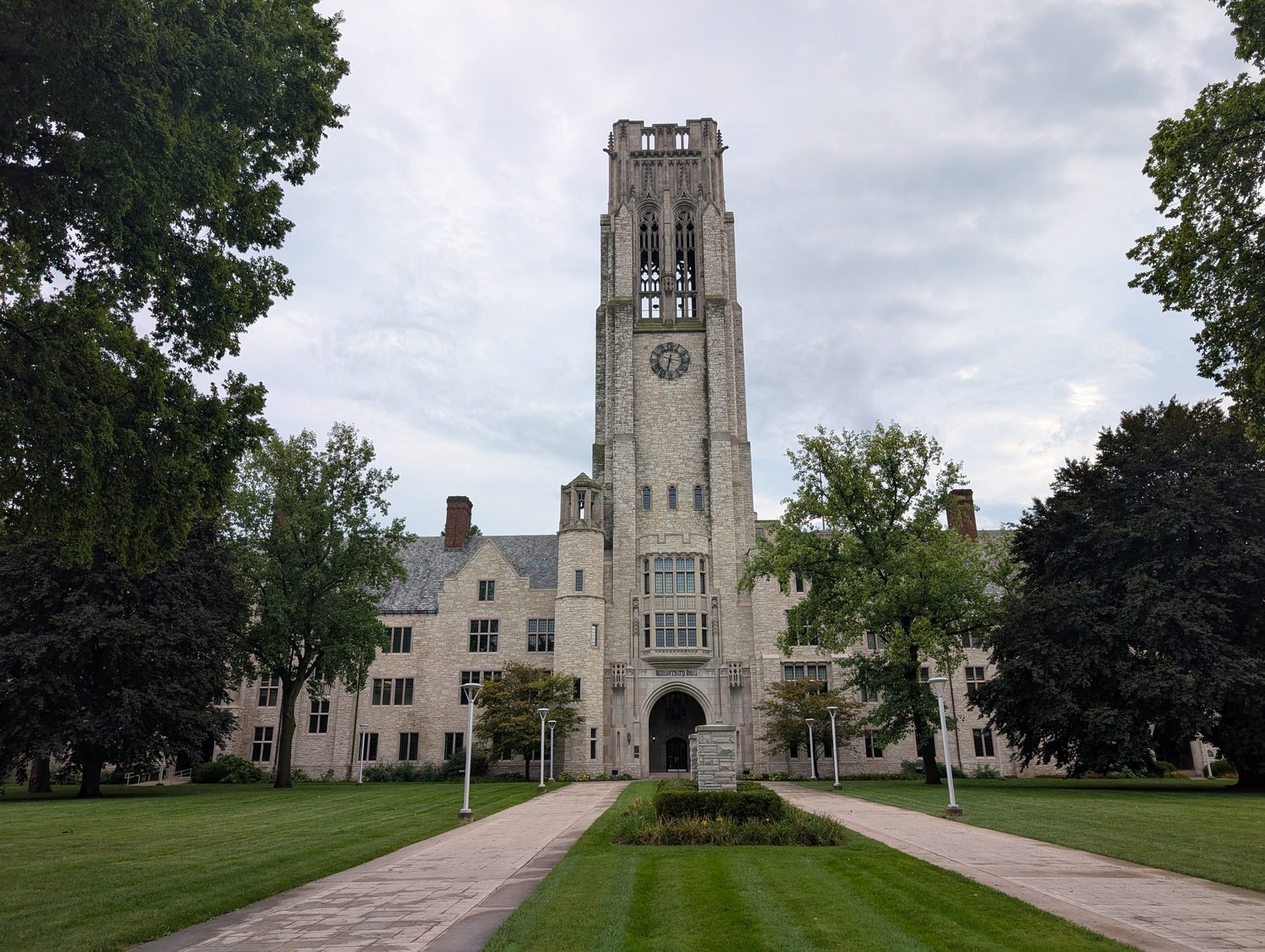
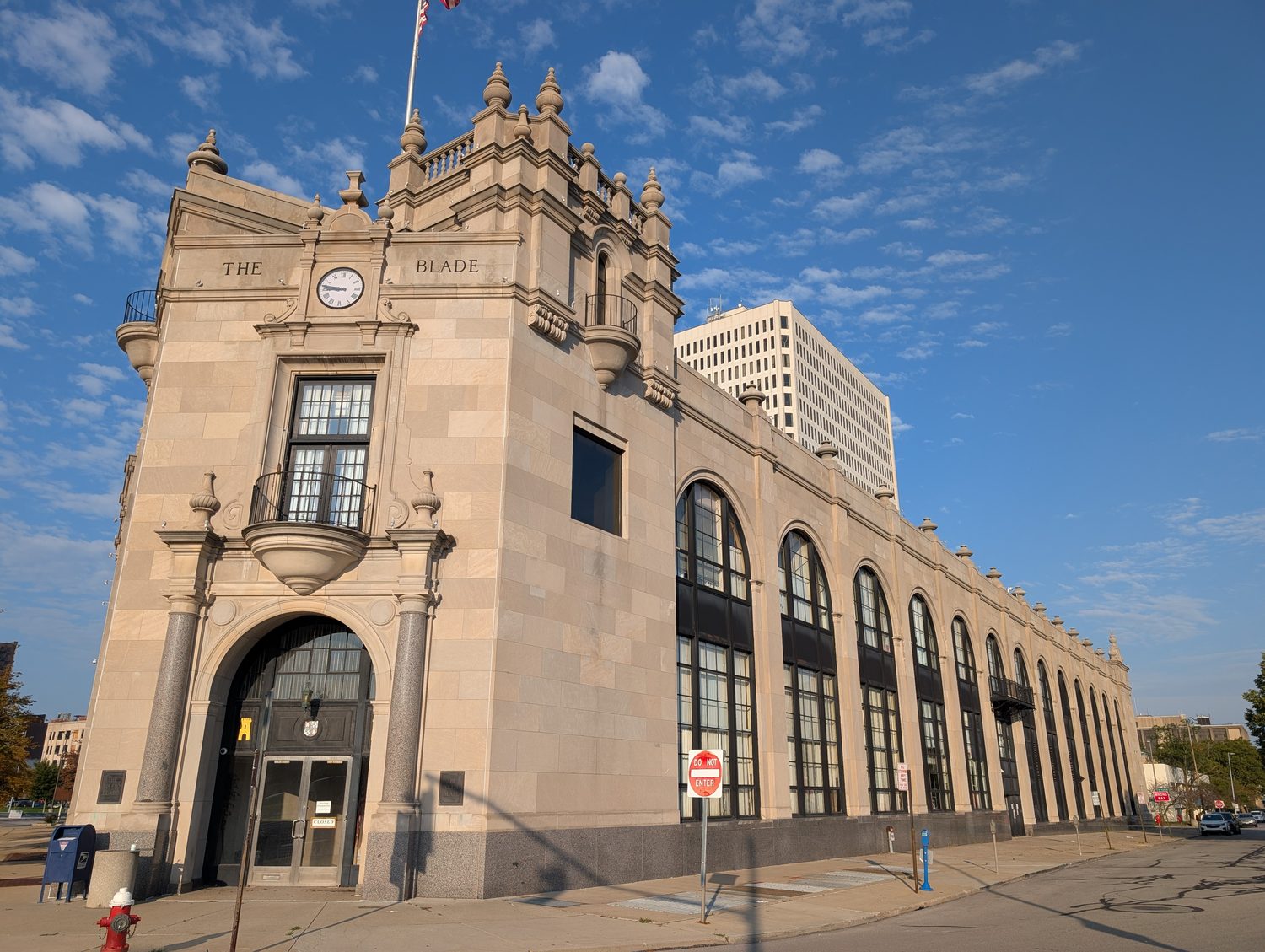
HER, AND HER TOLEDO — two portraits from the LBJ Presidential Library, then her school, the library that keeps her name, the church that bought the house, the university, and her mother’s newspaper, photographed Thursday. Dots switch the frame; works with scripts off. Toledo photographs by The Black Swamp Cock Ring.ELLA, Y SU TOLEDO: dos retratos de la Biblioteca Presidencial LBJ y después su escuela, la biblioteca que lleva su nombre, la iglesia que compró la casa, la universidad y el periódico de su madre, fotografiados el jueves. Los puntos cambian el cuadro; funciona sin scripts. Fotografías de Toledo de The Black Swamp Cock Ring.
The memoir.Las memorias. Random House announced An Unexpected Life on her 92nd birthday, March 26, and has it scheduled for Sept. 22 in hardcover and audio, 19 days after her death. The publisher describes it as her early life: a childhood shaped by constant motion, traveling with her itinerant father, caring for her mother, discovering the power of books, and the lessons of poverty in her youth. The description does not name Toledo. Her essay about her mother did, and ended on the house: it was her mother, she wrote, who sold it so that her daughter could leave. The announcement of her death asked that gifts in her memory go to Gloria’s Foundation.Random House anunció An Unexpected Life el día de su 92 cumpleaños, el 26 de marzo, y lo tiene previsto para el 22 de septiembre en tapa dura y audiolibro, 19 días después de su muerte. La editorial lo describe como su primera vida: una infancia marcada por el movimiento constante, viajando con un padre itinerante, cuidando a su madre, descubriendo el poder de los libros, y las lecciones de la pobreza en su juventud. La descripción no nombra Toledo. Su ensayo sobre su madre sí lo hacía, y terminaba en la casa: fue su madre, escribió, quien la vendió para que su hija pudiera irse. El anuncio de su muerte pidió que las donaciones en su memoria vayan a Gloria’s Foundation.
Sources: the announcement on Steinem’s Instagram account · Gloria’s Foundation (“Ruth, the Writer,” May 11, 2025) · University of Toledo honorary-degree register and UToledo News · Toledo Lucas County Public Library · Her Hat Was in the Ring · “Ruth’s Song,” in Outrageous Acts and Everyday Rebellions (1983; Open Road edition) · Penguin Random House announcement, March 26, 2026 · The Blade (March 3, 2018; Dec. 26, 2024) · 13abc · WTOL · NPR.Fuentes: el anuncio en la cuenta de Instagram de Steinem · Gloria’s Foundation (“Ruth, the Writer”, 11 de mayo de 2025) · registro de doctorados honorarios de la Universidad de Toledo y UToledo News · biblioteca pública del condado de Lucas · Her Hat Was in the Ring · “Ruth’s Song”, en Outrageous Acts and Everyday Rebellions (1983; edición de Open Road) · anuncio de Penguin Random House, 26 de marzo de 2026 · The Blade (3 de marzo de 2018; 26 de diciembre de 2024) · 13abc · WTOL · NPR.
CONTINUE TO THE REST OF THE PAPER →Esta nota abrió la No. 36 — Edición Vespertina. La edición es la unidad de este periódico: la viñeta, el resumen, las secciones, las correcciones y las fuentes viven allí, no aquí.
SEGUIR AL RESTO DEL PERIÓDICO →